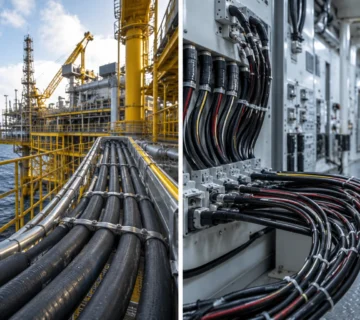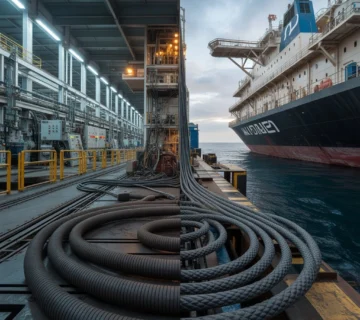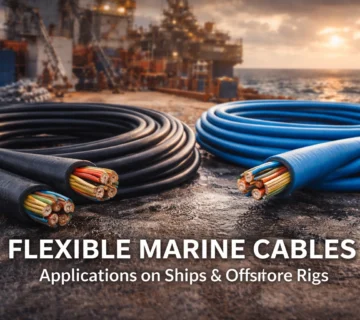
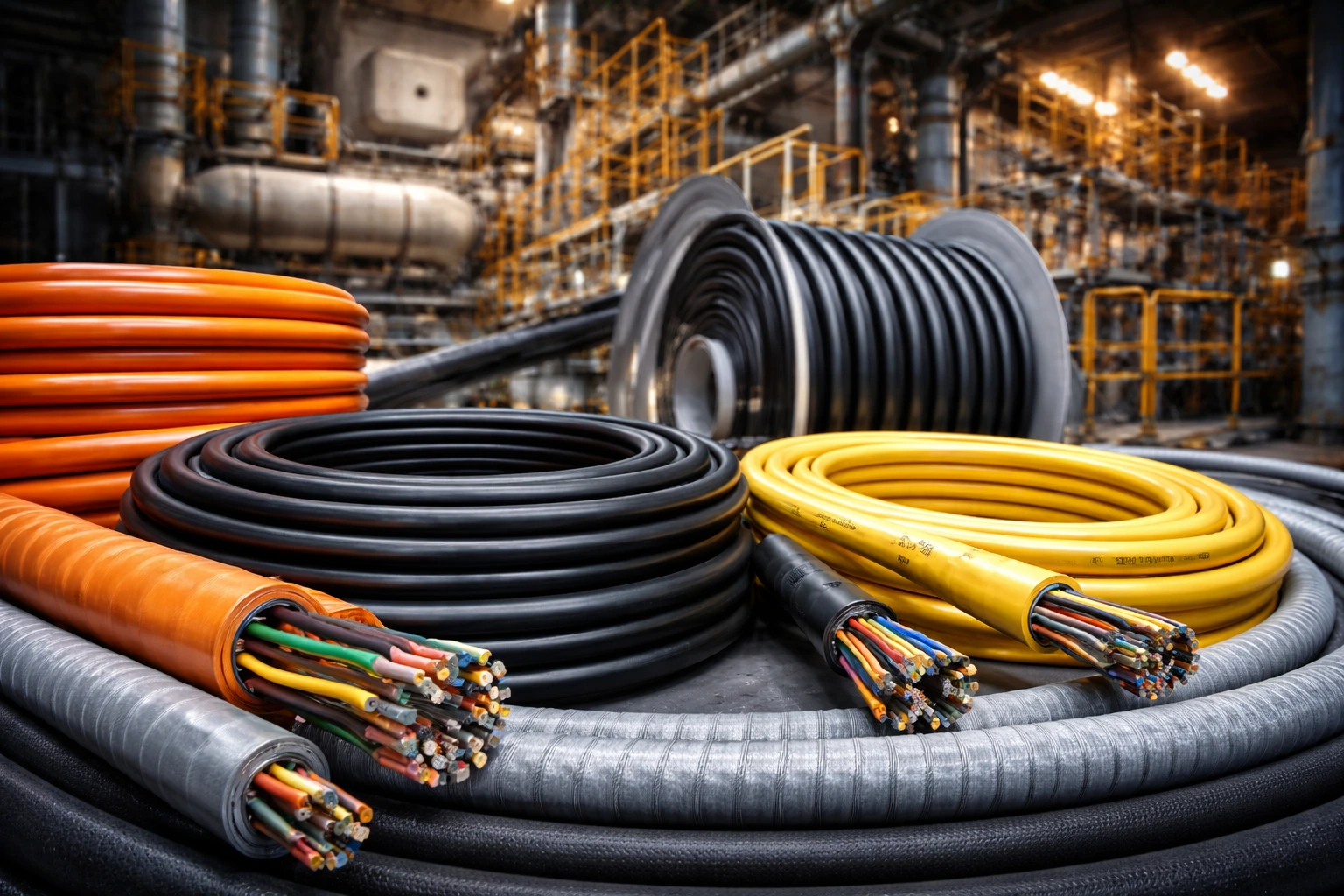
Flexible cable is an electrical cable designed to bend easily without breaking or losing performance. In industrial and marine environments, cables often need to withstand constant movement, vibration, and mechanical stress. For this reason, these cable is widely used in applications where durability and flexibility are equally important.
What Makes a Cable Flexible?
Manufacturers design flexible cable using finely stranded conductors instead of solid cores. As a result, the cable bends more easily and resists fatigue caused by repeated movement.
Key design features include:
- Multi-stranded copper conductors
- Flexible insulation materials
- Durable outer sheathing
- Resistance to vibration and bending stress
Because of these features, this cable performs reliably in dynamic environments.
Types of Cable
Different types of flexible cable are used depending on application requirements.
🔹 Flexible Power Cable
Used for transmitting electrical power in industrial machinery and equipment.
🔹 Marine Flexible Cable
Designed to resist moisture, corrosion, and harsh marine conditions.
🔹 Rubber Flexible Cable
Provides high flexibility and mechanical strength in heavy-duty applications.
🔹 Control Flexible Cable
Used in control panels and automation systems where repeated movement occurs.
Common Applications of Cable
These cable is widely used across industries that require movement or vibration resistance.
Common applications include:
- Industrial machinery
- Marine vessels and offshore platforms
- Construction equipment
- Control panels and automation systems
- Temporary power installations
Because these environments demand durability, flexible cable ensures long-term reliability.
Flexible Cable vs Rigid Cable
When comparing cable types, the main difference lies in flexibility and durability.
In comparison, fc:
- Withstands repeated bending
- Resists vibration damage
- Performs better in moving equipment
Rigid cables are suitable for fixed installations but are not ideal for dynamic applications.
Advantages of Using Flexible Cable
This cable offers multiple operational benefits.
🔹 Improved Durability
The stranded conductor design reduces breakage risk.
🔹 Easier Installation
Flexible cables are easier to route through complex pathways.
🔹 Better Performance in Motion
They maintain electrical integrity even under constant movement.
🔹 Suitable for Harsh Conditions
Certain flexible cables are designed to resist moisture, chemicals, and extreme temperatures.
How to Choose the Right Cable
Selecting the correct cable depends on operational needs. For this reason, industries evaluate:
- Voltage rating
- Current capacity
- Environmental exposure
- Flexibility requirements
- Compliance with safety standards
By selecting the appropriate cable, facilities improve safety and performance. To ensure product quality and compliance, many businesses source their cables from trusted flexible cable suppliers in UAE with proven industrial experience.
Final Thoughts
It plays a crucial role in industrial and marine electrical systems. As a result, industries rely on flexible solutions to ensure durability, safe power transmission, and long-term operational efficiency.
FAQs – Frequently Asked Questions
Q1. What is fc used for?
Ans – Applications that require frequent movement, vibration resistance, and reliable power transmission use it.
Q2. What is the difference between flexible and rigid cable?
Ans – This cable uses stranded conductors for bending durability, while rigid cable uses solid conductors for fixed installations.
Q3. Is flexible cable suitable for marine use?
Ans – Yes. Marine flexible cables are designed to resist moisture, corrosion, and harsh environmental conditions.
Q4. How do I choose the right flexible cable?
Ans – You should consider voltage rating, environmental exposure, flexibility requirements, and compliance standards.