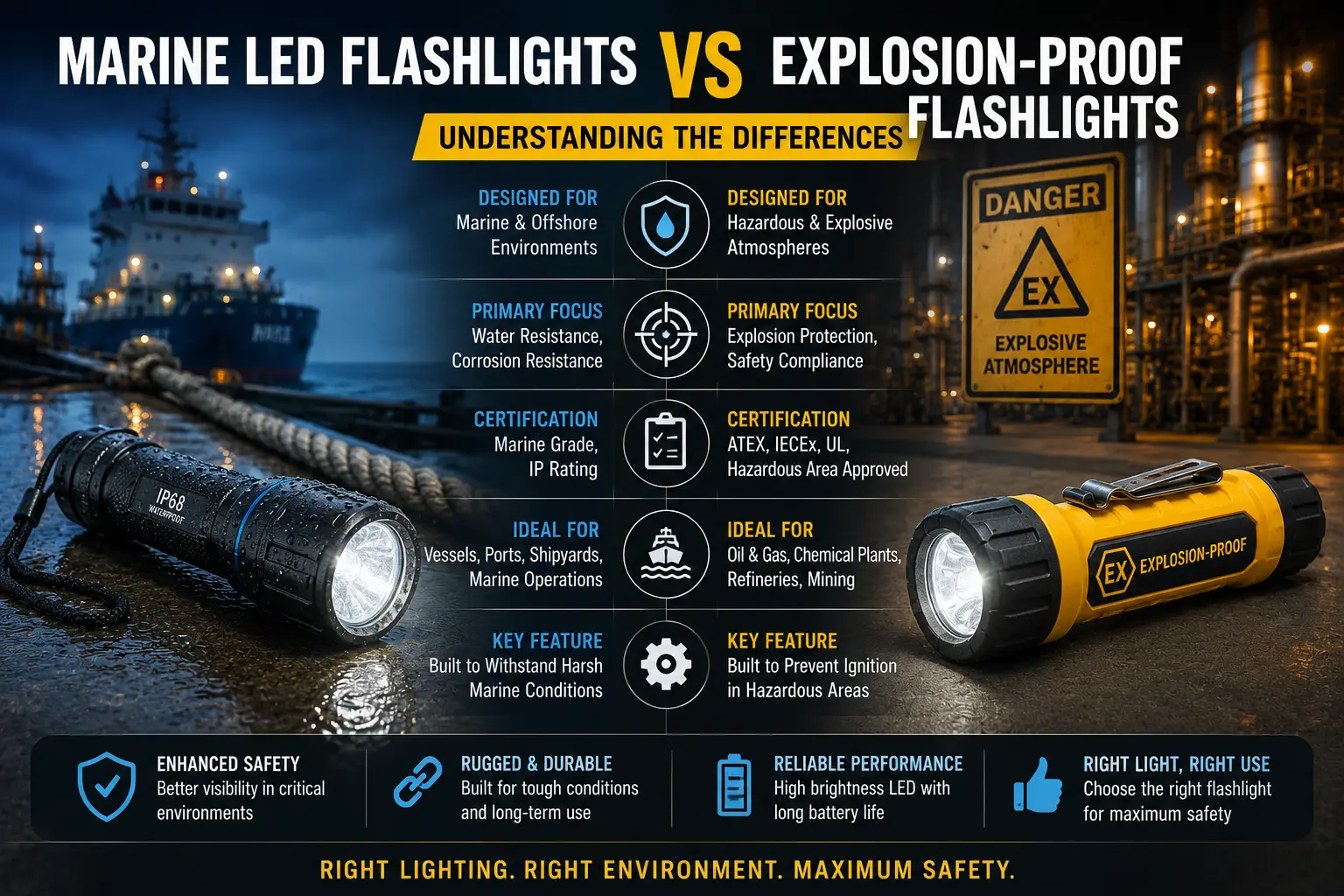
Reliable portable lighting is essential across marine, offshore, and industrial environments. Whether performing maintenance on a commercial vessel, inspecting equipment on an offshore platform, or working inside hazardous industrial facilities, choosing the right flashlight directly impacts safety, visibility, and operational efficiency.
Two of the most commonly used lighting solutions are marine LED flashlights and explosion-proof flashlights. Although they may appear similar, they are designed for different environments and safety requirements.
Marine LED flashlights are built to withstand harsh marine conditions such as saltwater, humidity, and corrosion, while explosion-proof flashlights are engineered for hazardous areas where flammable gases, vapors, or combustible dust may be present.
Understanding the differences between these lighting solutions helps vessel operators, industrial facilities, and offshore professionals select the right equipment for their specific applications.
This guide compares marine LED flashlights vs explosion-proof flashlights, explaining their features, applications, and how to choose the right flashlight for your operational needs.
What Are Marine LED Flashlights?
Marine LED flashlights are portable lighting devices specifically designed for use in marine and offshore environments. They are manufactured using corrosion-resistant materials and durable construction to withstand continuous exposure to moisture, saltwater, vibration, and demanding weather conditions.
These flashlights provide reliable illumination for routine inspections, maintenance work, emergency situations, and onboard operations.
Marine LED flashlights are commonly used on:
- Cargo vessels
- Commercial ships
- Offshore support vessels
- Fishing boats
- Marine terminals
- Ports
- Shipyards
- Coast guard vessels
Because of their rugged construction and energy-efficient LED technology, they are widely used throughout the maritime industry.
What Are Explosion-Proof Flashlights?
Explosion-proof flashlights are specially engineered portable lighting devices designed for hazardous environments where explosive gases, combustible dust, or flammable vapors may be present.
Unlike standard flashlights, these lighting tools are designed to minimize ignition risks by preventing sparks or excessive surface temperatures that could ignite hazardous atmospheres.
Explosion-proof flashlights are commonly used in:
- Oil & gas facilities
- Offshore drilling platforms
- Chemical plants
- Refineries
- Petrochemical facilities
- Mining operations
- Fuel storage terminals
These flashlights provide dependable lighting while supporting workplace safety in hazardous industrial environments.
Marine LED Flashlights vs Explosion-Proof Flashlights
Although both flashlights use modern LED technology, they are designed to solve different operational challenges.
| Feature | Marine LED Flashlights | Explosion-Proof Flashlights |
| Primary Use | Marine & Offshore Operations | Hazardous Industrial Areas |
| Water Resistance | Excellent | Excellent |
| Corrosion Resistance | High | High |
| Explosion Protection | No | Yes |
| Hazardous Area Approved | No | Yes |
| Typical Users | Marine Crew | Industrial Workers |
| Operating Environment | Marine Conditions | Explosive Atmospheres |
Selecting the correct flashlight depends on both environmental conditions and workplace safety requirements.
Key Differences Between Marine LED Flashlights and Explosion-Proof Flashlights
Operating Environment
Marine LED flashlights are primarily designed for harsh marine conditions involving saltwater, humidity, rain, and continuous outdoor use.
Explosion-proof flashlights are intended for hazardous industrial environments where combustible gases or vapors create explosion risks.
Safety Features
Marine flashlights focus on durability, waterproof construction, and reliable illumination.
Explosion-proof flashlights incorporate specialized safety designs that reduce ignition risks in classified hazardous locations.
Construction
Marine flashlights are built with corrosion-resistant materials capable of surviving marine environments.
Explosion-proof flashlights use heavy-duty protective housings specifically designed for hazardous industrial applications.
Compliance Requirements
Hazardous industrial environments often require certified explosion-proof equipment to comply with applicable safety standards.
Marine flashlights generally focus on marine durability rather than hazardous area certification.
When Should You Choose Marine LED Flashlights?
Marine LED flashlights are the preferred choice when working in environments where moisture, saltwater, and challenging weather conditions are the primary concerns.
They are ideal for:
Vessel Inspections
Routine inspections during day and night operations.
Ship Maintenance
Maintenance teams rely on portable lighting while servicing engines, equipment, and onboard systems.
Emergency Preparedness
Reliable portable lighting is essential during emergency situations and power failures.
Port Operations
Marine personnel working at ports, docks, and terminals benefit from durable waterproof flashlights.
Search and Rescue
Marine LED flashlights provide dependable illumination for rescue and emergency response operations.
When Are Explosion-Proof Flashlights Essential?
Explosion-proof flashlights should always be used where hazardous atmospheres may exist.
Common applications include:
Oil & Gas Facilities
Inspection and maintenance work around processing equipment.
Offshore Platforms
Hazardous offshore installations require certified portable lighting solutions.
Chemical Plants
Safe inspection lighting around volatile chemicals.
Mining Operations
Portable lighting designed for challenging underground environments.
Fuel Storage Facilities
Safe lighting around flammable liquids and vapor zones.
Common Industrial Applications
Both flashlight types serve important roles across industrial sectors.
Marine LED Flashlights
Widely used in:
- Commercial vessels
- Marine terminals
- Offshore support vessels
- Shipyards
- Ports
- Coast guard operations
Explosion-Proof Flashlights
Commonly installed in:
- Oil & gas industries
- Petrochemical plants
- Chemical facilities
- Refineries
- Hazardous manufacturing facilities
- Offshore drilling operations
Choosing the appropriate flashlight improves both operational efficiency and workplace safety.
How to Choose the Right Flashlight
Before selecting a portable lighting solution, consider the following factors.
Work Environment
Determine whether the flashlight will be used in a marine environment or a hazardous industrial location.
Safety Requirements
Hazardous areas require explosion-proof certified flashlights.
Durability
Select products designed to withstand moisture, impact, vibration, and harsh operating conditions.
Battery Performance
Long battery life helps improve productivity during extended operations.
Brightness
Choose a flashlight that provides sufficient illumination without excessive power consumption.
Why Choosing the Right Portable Lighting Matters
Portable lighting supports far more than visibility.
Selecting the appropriate flashlight helps:
- Improve workplace safety
- Increase operational efficiency
- Reduce equipment failure risks
- Support regulatory compliance
- Improve emergency preparedness
Using the correct flashlight for the intended environment helps protect both personnel and equipment.
Conclusion
Marine LED flashlights and explosion-proof flashlights are designed for different operational environments. Marine LED flashlights offer reliable performance in challenging marine conditions where water resistance, durability, and corrosion protection are essential.
Explosion-proof flashlights, however, are specifically engineered for hazardous industrial environments where ignition risks must be minimized.
By understanding the differences between these lighting solutions, businesses can select equipment that improves safety, enhances operational performance, and supports long-term reliability across marine and industrial applications.
FAQs
Q1. What is the difference between marine LED flashlights and explosion-proof flashlights?
Ans – Marine LED flashlights are designed for marine environments with high resistance to water and corrosion, while explosion-proof flashlights are engineered for hazardous areas where flammable gases or combustible dust may be present.
Q2. Where are marine LED flashlights commonly used?
Ans – They are widely used on commercial vessels, offshore support ships, ports, shipyards, fishing boats, and marine maintenance operations.
Q3. When should explosion-proof flashlights be used?
Ans – Explosion-proof flashlights should be used in hazardous industrial environments such as oil and gas facilities, chemical plants, refineries, mining operations, and offshore drilling platforms.
Q4. Are explosion-proof flashlights waterproof?
Ans – Many explosion-proof flashlights offer excellent water resistance, but their primary purpose is to provide safe illumination in hazardous environments.
Q5. How do I choose the right industrial flashlight?
Ans – Consider the operating environment, safety requirements, durability, brightness, battery performance, and applicable industry certifications before selecting a flashlight.Top of Form