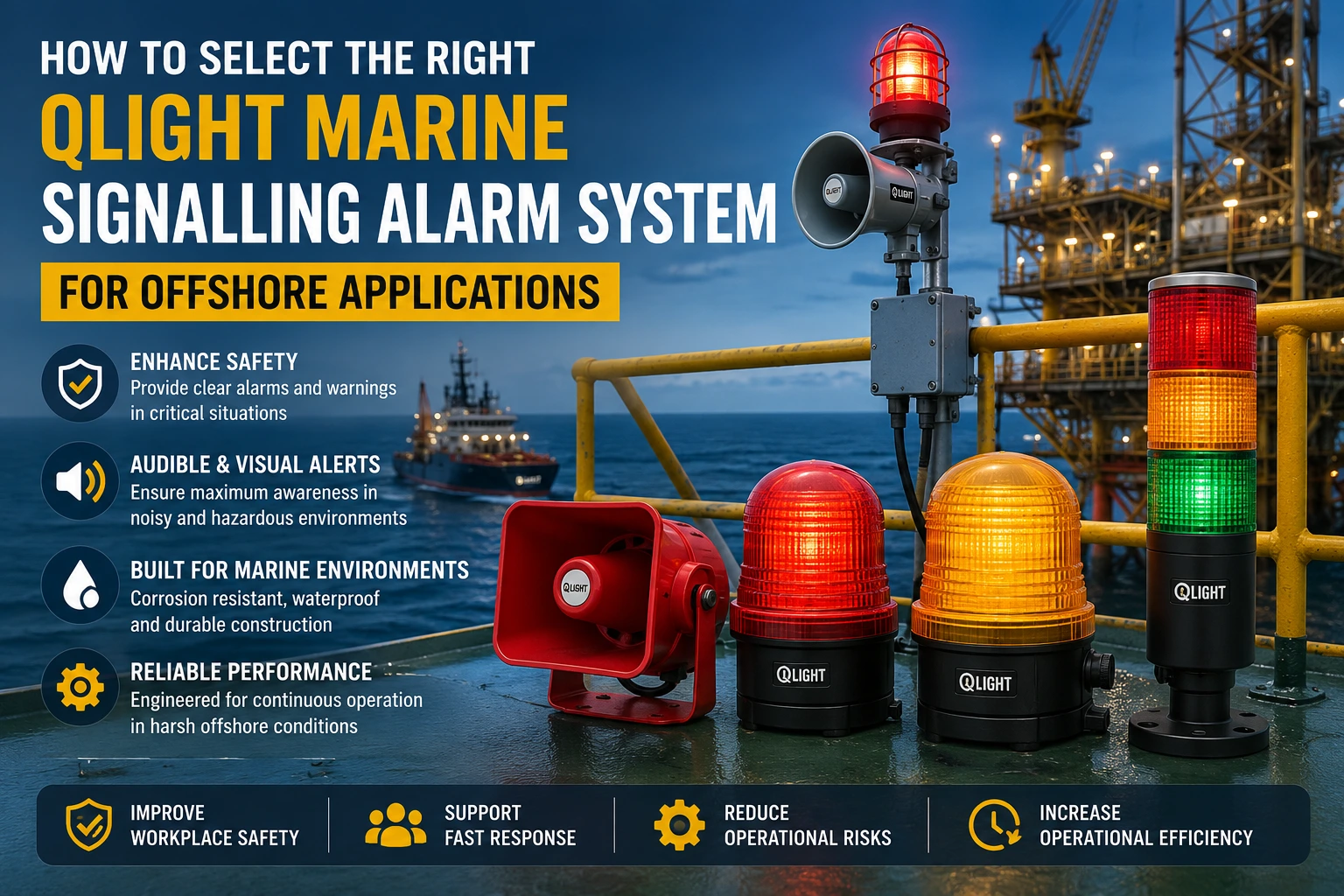
Reliable communication is essential for safe and efficient offshore operations. Whether on offshore platforms, commercial vessels, shipyards, marine terminals, or industrial marine facilities, workers must be able to receive immediate warnings during emergencies, equipment failures, or hazardous situations.
This is where a Qlight marine signalling alarm system plays a critical role. Designed for demanding marine and offshore environments, these signalling systems provide clear audible and visual alerts that help improve safety, minimize response time, and support uninterrupted operations.
However, selecting the right signalling alarm system involves more than choosing a siren or warning light. Factors such as environmental conditions, alarm type, visibility, durability, and installation requirements all influence system performance.
This guide explains how to select the right Qlight marine signalling alarm system for offshore applications and highlights the key considerations for choosing a reliable marine safety solution.
What Is a Qlight Marine Signalling Alarm System?
A Qlight marine signalling alarm system is an audible and visual warning system designed specifically for marine and offshore environments. These systems provide immediate alerts during emergencies, equipment faults, operational hazards, or safety events.
A reliable Qlight marine si gnalling alarm system helps improve communication and workplace safety across offshore and marine operations.
Depending on operational requirements, Qlight systems may include:
- Warning beacons
- LED signal lights
- Audible alarms
- Combination sounder beacons
- Marine signal towers
- Emergency warning systems
These signalling devices are engineered to operate reliably under harsh marine conditions including moisture, saltwater exposure, vibration, and changing weather.
Why Marine Signalling Systems Are Important
Marine operations involve heavy machinery, moving equipment, limited visibility, and hazardous environments where rapid communication is essential.
Marine signalling alarm systems help:
- Improve workplace safety
- Alert personnel during emergencies
- Support equipment monitoring
- Reduce accident risks
- Improve operational efficiency
- Assist emergency evacuation procedures
Fast and reliable warning systems allow personnel to react quickly before incidents become serious.
Key Factors to Consider Before Choosing a Marine Signalling Alarm System
Selecting the right signalling system requires evaluating the operating environment and application requirements.
Environmental Conditions
Marine equipment must operate reliably despite exposure to:
- Saltwater
- Humidity
- Heavy rain
- UV radiation
- High winds
- Corrosive environments
Choose signalling devices specifically designed for marine applications.
Audible Alarm Performance
Offshore facilities often contain noisy equipment including engines, pumps, compressors, and generators.
Alarm systems should provide sufficient sound output to remain audible above background industrial noise.
Visual Warning Capability
Visual warning devices are equally important where personnel may not hear audible alarms.
High-intensity LED warning lights improve visibility during:
- Low-light conditions
- Fog
- Rain
- Offshore operations
- Machinery areas
Durability
Marine environments demand equipment capable of continuous operation under difficult conditions.
Reliable signalling devices should offer:
- Corrosion resistance
- Waterproof construction
- Vibration resistance
- Long operational life
- Low maintenance requirements
Installation Requirements
Before selecting a signalling system, consider:
- Mounting location
- Power supply
- Visibility angle
- Cable routing
- Maintenance accessibility
Proper installation improves system effectiveness and long-term reliability. Proper cable routing using high-quality marine cables helps ensure reliable performance of marine signalling systems.
Types of Qlight Marine Signalling Devices
Qlight offers various signalling solutions designed for different operational requirements.
LED Warning Lights
Provide bright visual alerts for equipment status and operational warnings.
Commonly installed on:
- Marine machinery
- Offshore platforms
- Port equipment
- Industrial control systems
Audible Alarm Systems
Generate warning sounds to alert personnel during emergencies or equipment faults.
Suitable for:
- Engine rooms
- Offshore platforms
- Processing plants
- Marine terminals
Combination Sounder Beacons
These devices combine audible alarms with LED warning lights for maximum visibility and awareness.
They are widely used where both visual and audible alerts are required.
Signal Towers
Signal towers display equipment status using multiple colored LED indicators.
Applications include:
- Industrial automation
- Marine control panels
- Manufacturing systems
- Offshore electrical systems
Common Offshore Applications
Qlight marine signalling systems are used across multiple marine industries. Commercial vessels also depend on certified marine navigation signal lights to enhance visibility and support safe navigation.
Offshore Oil & Gas Platforms
Providing emergency alarms and operational status indications. Offshore installations commonly use durable RFOU offshore cables to ensure dependable power and signal transmission in harsh marine environments.
Commercial Vessels
Supporting navigation, machinery monitoring, and onboard safety.
Marine Terminals
Helping coordinate loading, unloading, and operational activities.
Shipyards
Providing warning signals during construction and maintenance work.
Port Operations
Improving safety around heavy lifting equipment and cargo handling systems.
Benefits of Choosing the Right Marine Signalling Alarm System
Selecting an appropriate signalling solution offers several operational advantages.
Improved Worker Safety
Provides immediate warning during hazardous situations.
Faster Emergency Response
Helps personnel react quickly to alarms and operational issues.
Reliable Marine Performance
Designed to perform consistently in harsh offshore environments.
Reduced Downtime
Early warning systems help identify issues before they become major operational problems.
Long Service Life
Marine-grade construction reduces maintenance requirements while improving equipment reliability.
Common Mistakes to Avoid
Many organizations select signalling equipment without fully considering operational requirements.
Common mistakes include:
- Choosing indoor signalling devices for marine use
- Ignoring environmental conditions
- Selecting insufficient sound output
- Poor mounting locations
- Incorrect visibility coverage
- Lack of routine maintenance
Proper planning helps maximize signalling system performance.
Why Choosing the Right Marine Signalling System Matters
Marine signalling equipment plays a vital role in protecting personnel, equipment, and operational continuity.
High-quality signalling systems help:
- Improve communication
- Enhance workplace safety
- Reduce accident risks
- Support regulatory compliance
- Increase operational reliability
Investing in dependable marine signalling equipment contributes to safer offshore operations and improved long-term performance.
Conclusion
Selecting the right Qlight marine signalling alarm system is essential for maintaining safety, improving communication, and supporting efficient offshore operations. Factors such as environmental conditions, audible performance, visual visibility, durability, and installation requirements should all be carefully evaluated before choosing a system.
Whether used on offshore platforms, commercial vessels, marine terminals, or industrial facilities, reliable marine signalling equipment helps personnel respond quickly to hazards while improving operational safety and efficiency.
Choosing a high-quality Qlight marine signalling alarm system is an investment in safer, more dependable marine operations.
FAQs
Q1. What is a Qlight marine signalling alarm system?
Ans – A Qlight marine signalling alarm system is an audible and visual warning system designed to improve safety and communication in marine and offshore environments.
Q2. Where are marine signalling alarm systems commonly used?
Ans – They are widely used on offshore platforms, commercial vessels, shipyards, marine terminals, ports, and offshore oil and gas facilities.
Q3. Why are marine signalling systems important?
Ans – Marine signalling systems provide immediate visual and audible alerts that help personnel respond quickly to emergencies, equipment faults, and hazardous situations.
Q4. What factors should I consider when selecting a marine signalling alarm system?
Ans – Consider environmental conditions, alarm volume, visual visibility, durability, installation requirements, maintenance needs, and the intended application.
Q5. Why are LED marine signalling systems preferred?
Ans – LED signalling systems offer excellent visibility, low power consumption, long service life, and reliable performance in harsh marine and offshore environments.