
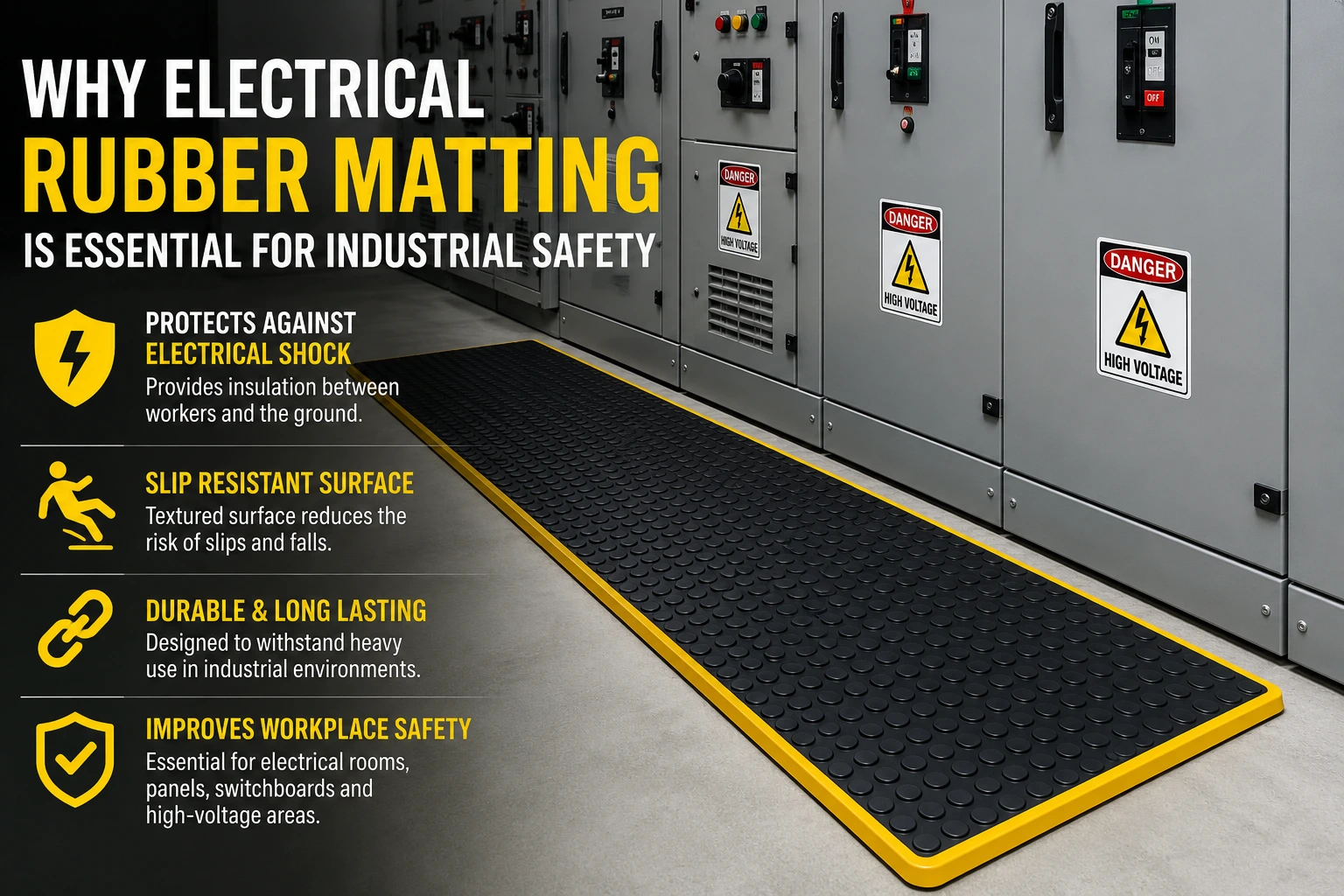
Electrical safety is a top priority in industrial facilities where employees regularly work near electrical panels, switchgear, transformers, generators, and high-voltage equipment. Even with advanced electrical protection systems in place, accidental contact with live electrical equipment can lead to serious injuries, equipment damage, or operational downtime.
One of the simplest yet most effective safety solutions used across industries is electrical rubber matting. These specially designed insulation mats provide an additional layer of protection by reducing the risk of electric shock and improving workplace safety around energized equipment.
From manufacturing plants and power stations to data centers, substations, and offshore facilities, electrical rubber matting plays a vital role in maintaining safe working environments.
This guide explains why electrical rubber matting is essential for industrial safety, its key benefits, common applications, and how to choose the right insulation mat for your facility.
What Is Electrical Rubber Matting?
Electrical rubber matting is a non-conductive safety mat designed to protect personnel working near energized electrical equipment. Manufactured from high-quality insulating rubber compounds, these mats act as a barrier between workers and the ground, helping reduce the risk of electrical shock.
Electrical insulation mats are commonly installed in front of:
- Electrical control panels
- Switchboards
- Distribution boards
- Transformer rooms
- Generator panels
- High-voltage equipment
- Motor control centers (MCC)
- Substations
Because of their insulating properties, these mats help create a safer working environment for electricians, maintenance personnel, and industrial operators. Installing certified electrical rubber matting is an effective way to improve safety around high-voltage electrical equipment.
Why Electrical Rubber Matting Is Important
Industrial electrical systems operate with high voltages capable of causing severe injuries if proper safety measures are not followed.
Electrical rubber matting provides an additional protective layer by insulating workers from ground potential while operating or maintaining electrical equipment.
Its importance extends beyond compliance, helping businesses improve workplace safety while minimizing operational risks.
Major reasons industries use electrical insulation mats include:
- Protection against electrical shock
- Improved workplace safety
- Additional insulation near live equipment
- Reduced accident risks
- Compliance with electrical safety practices
- Enhanced confidence for maintenance personnel
Top Benefits of Electrical Rubber Matting
- Protection Against Electric Shock
The primary purpose of electrical rubber matting is to reduce the risk of electric shock when working near energized electrical systems.
The insulating rubber material helps prevent electrical current from passing through the body by providing effective insulation between personnel and the ground.
- Improved Workplace Safety
Electrical accidents can result in injuries, equipment damage, production delays, and costly downtime.
Installing electrical insulation mats around high-risk electrical equipment helps create a safer working environment while supporting overall industrial safety practices.
- High Electrical Insulation
Electrical rubber mats are specifically designed using insulating rubber compounds capable of withstanding electrical stress.
High-quality insulation mats provide dependable protection in demanding industrial environments where electrical safety is critical.
- Durable Industrial Performance
Industrial environments expose safety equipment to heavy foot traffic, mechanical wear, dust, oils, and varying temperatures.
Electrical rubber matting is manufactured to provide:
- High durability
- Wear resistance
- Long service life
- Reliable insulation performance
- Low maintenance
This makes it suitable for continuous industrial use.
- Slip-Resistant Surface
Many electrical insulation mats feature textured surfaces that improve grip and reduce the risk of slips and falls.
This additional safety feature is especially valuable in facilities where moisture or industrial contaminants may be present.
- Resistance to Industrial Conditions
Electrical rubber matting performs well in challenging industrial environments where exposure to dust, moisture, oils, and heavy equipment is common.
Its robust construction allows it to maintain insulation performance under demanding operating conditions.
Where Is Electrical Rubber Matting Used?
Electrical insulation mats are widely used across industries where personnel work near energized electrical systems.
Common applications include:
Electrical Control Rooms
Installed in front of electrical panels and switchboards to provide insulation for operators.
Manufacturing Facilities
Used near production equipment, automation systems, and power distribution panels.
Power Plants & Substations
Electrical safety mats help protect maintenance personnel working around high-voltage electrical installations.
Data Centers
Installed near UPS systems, switchgear, and electrical distribution equipment.
Offshore & Marine Facilities
Marine electrical systems often require additional insulation measures because of moisture and challenging environmental conditions. Marine operators also use marine cables alongside insulated flooring solutions to ensure safe and reliable electrical installations.
Industrial Plants
Factories, refineries, chemical plants, and heavy industrial facilities commonly use electrical insulation mats to improve workplace safety.
How to Choose the Right Electrical Rubber Mat
Selecting the correct insulation mat depends on several factors.
Voltage Rating
Choose a mat designed for the operating voltage of the electrical equipment.
Material Quality
High-quality rubber compounds provide better insulation performance and longer service life.
Thickness
Mat thickness should match the required insulation level and intended industrial application.
Surface Finish
Slip-resistant textured surfaces improve worker safety during maintenance activities.
Compliance
Always select electrical insulation mats that comply with relevant industrial safety standards and testing requirements.
Common Mistakes to Avoid
Many facilities install electrical safety equipment without considering long-term performance requirements.
Common mistakes include:
- Using ordinary rubber flooring instead of insulation mats
- Selecting incorrect voltage ratings
- Installing damaged or worn mats
- Ignoring regular inspections
- Using undersized mats around electrical equipment
Routine inspection and proper installation help maintain effective electrical protection.
Why Quality Electrical Rubber Matting Matters
Choosing high-quality electrical insulation mats provides long-term safety and operational benefits.
Quality products help:
- Reduce workplace accidents
- Improve employee protection
- Support industrial safety programs
- Minimize maintenance requirements
- Increase operational reliability
For facilities operating critical electrical infrastructure, investing in dependable electrical rubber matting is a practical safety decision.
Industrial Safety Best Practices
Electrical rubber matting should be part of a comprehensive electrical safety program that includes:
- Proper PPE
- Lockout/Tagout procedures
- Equipment inspections
- Employee safety training
- Routine maintenance
- Regular insulation testing
Combining these measures creates a safer working environment while reducing operational risks. Facilities operating in hazardous environments should also install certified explosion-proof light fittings to enhance overall workplace safety.
Conclusion
Electrical rubber matting is an essential component of industrial electrical safety. By providing reliable insulation between personnel and energized equipment, these mats help reduce the risk of electrical shock while improving workplace safety.
Whether installed in manufacturing plants, substations, control rooms, offshore facilities, or industrial power systems, high-quality electrical insulation mats contribute to safer operations, regulatory compliance, and long-term reliability. Choosing high-quality electrical insulation rubber mats helps businesses create a safer working environment while protecting personnel from electrical hazards.
Selecting the right electrical rubber matting solution is a valuable investment in protecting both employees and critical electrical infrastructure.
FAQs
Q1. What is electrical rubber matting used for?
Ans – Electrical rubber matting is used to protect personnel working near energized electrical equipment by providing insulation against electrical shock.
Q2. Where should electrical insulation mats be installed?
Ans – They are commonly installed in front of electrical panels, switchboards, substations, transformers, generator rooms, and motor control centers.
Q3. Why is electrical rubber matting important?
Ans – It helps improve workplace safety by reducing the risk of electrical shock and providing an additional layer of insulation for workers.
Q4. How do I choose the right electrical rubber mat?
Ans – Consider factors such as voltage rating, material quality, thickness, surface finish, durability, and compliance with industrial safety standards.
Q5. Which industries use electrical rubber matting?
Ans – Electrical rubber matting is widely used in manufacturing plants, power stations, substations, offshore facilities, data centers, commercial buildings, and industrial electrical installations.