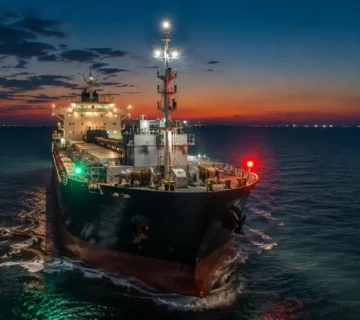
Ships and offshore vessels use navigation lights as essential safety components to indicate position, direction, and operational status. At sea, vessels rely on navigation lights to avoid collisions and maintain safe distances from other ships. For this reason, international maritime regulations require vessels to display specific navigation lights during nighttime and low visibility conditions.
What Are Navigation Lights?
Vessels use specialized navigation lights to communicate their movement and position to nearby ships. In simple terms, these lights act as visual signals that help sailors understand another vessel’s direction, orientation, and operational status.
These lights follow standards defined by the International Regulations for Preventing Collisions at Sea (COLREGs).
Main Types of Navigation Lights
Different navigation lights are installed on ships to indicate specific information.
🔹 Masthead Light
The vessel places the masthead light at the front, and it shines forward over a wide arc. It indicates the presence and direction of a powered vessel.
🔹 Stern Light
The stern light sits at the rear of the vessel and shines toward the back, helping other ships identify the vessel from behind.
🔹 Side Lights
Side lights are installed on both sides of the vessel.
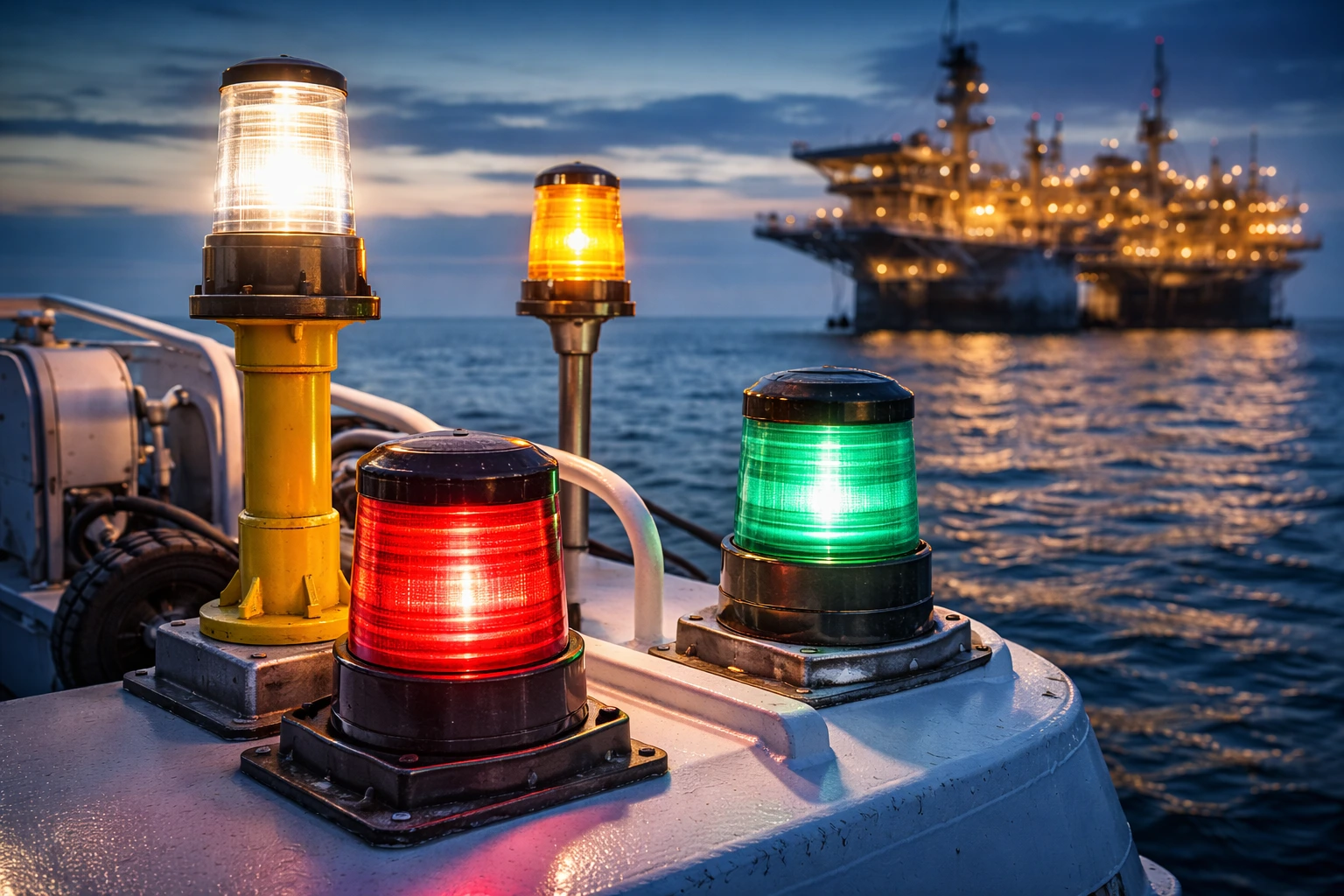
- Port side – red light
- Starboard side – green light
These lights help determine a vessel’s direction relative to another ship.
🔹 All-Round Light
All-round lights emit light across a full 360-degree arc. They are often used on smaller vessels or special maritime operations.
🔹 Towing Light
A towing light indicates when a vessel is towing another vessel or object at sea.
Why Navigation Lights Are Important for Maritime Safety
Navigation lights play a critical role in preventing collisions at sea. As a result, maritime authorities enforce strict lighting rules for all vessels.
Navigation lights help vessels:
- Identify other ships’ direction and movement
- Avoid collisions in low visibility conditions
- Comply with international maritime regulations
- Improve safety during nighttime operations
Because marine environments can be unpredictable, proper navigation lighting is essential.
Navigation Lights for Offshore Vessels
Offshore vessels operating near oil platforms, ports, or construction sites require reliable navigation lighting systems. For this reason, these vessels use high-quality marine lighting equipment that withstands harsh weather conditions.
Common offshore vessels using navigation lights include:
- Supply vessels
- Tugboats
- Offshore support vessels
- Marine construction vessels
Safety Standards for Marine Navigation Lights
Marine navigation lights must comply with international maritime regulations. Therefore, ship lighting systems must meet strict standards.
Key regulations include:
- COLREGs maritime lighting rules
- International maritime safety guidelines
- Marine equipment certification standards
These standards ensure visibility and safe vessel communication.
Final Thoughts
Navigation lights are fundamental safety systems used in maritime operations worldwide. As a result, ships and offshore vessels rely on properly installed navigation lights to maintain safe navigation, prevent collisions, and comply with international marine regulations.
For reliable maritime operations, vessels depend on high-quality marine navigation lights designed for durability and compliance with international safety standards.
FAQs – Frequently Asked Questions
Q1. What are navigation lights used for on ships?
Ans – Navigation lights help ships indicate their position, direction, and movement to other vessels at sea.
Q2. What color are ship navigation lights?
Ans – Ships typically use red lights on the port side, green lights on the starboard side, and white lights for masthead and stern illumination.
Q3. Are navigation lights required on all vessels?
Ans – Yes. Most vessels must use navigation lights during nighttime and reduced visibility conditions under maritime regulations.
Q4. What regulation governs navigation lights on ships?
Ans – The COLREGs (International Regulations for Preventing Collisions at Sea) govern navigation lights.