Lighting plays a crucial role in ensuring safety, visibility, and operational efficiency on ships and offshore vessels. In marine environments, lighting systems must withstand vibration, moisture, salt exposure, and harsh weather conditions. For this reason, vessel operators often compare fluorescent vs LED lighting to determine the most reliable option.
Overview of Fluorescent Lighting in Marine Applications
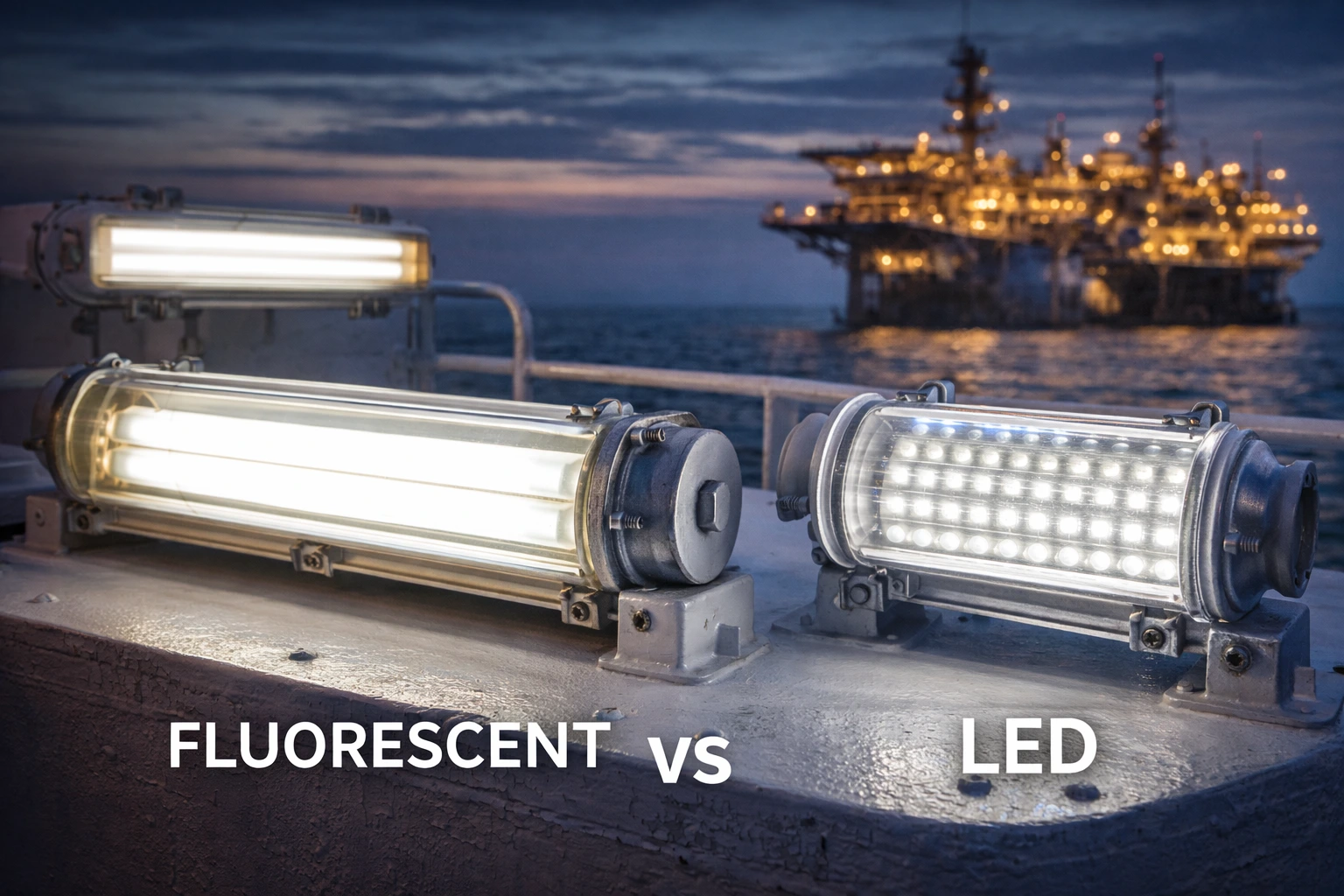
Fluorescent lighting has been widely used in marine vessels for many years. These lights work by passing electricity through mercury vapor to produce ultraviolet light, which then generates visible light through a phosphor coating.
Fluorescent lighting offers:
- Relatively low energy consumption compared to traditional incandescent lights
- Wide illumination coverage
- Affordable installation cost
However, fluorescent lights can be sensitive to vibration and temperature changes commonly found in marine environments.
Overview of LED Lighting for Marine Applications
LED lighting has become increasingly popular in maritime operations due to its efficiency and durability. LEDs produce light through semiconductor technology rather than gas discharge.
LED marine lighting provides several advantages:
- High energy efficiency
- Long operational lifespan
- Low heat generation
- Better resistance to vibration and shock
As a result, many modern vessels are transitioning to LED lighting systems.
Key Differences Between Fluorescent and LED Marine Lighting
When comparing fluorescent vs LED lighting, several important differences emerge.
🔹 Energy Efficiency
LED lights consume significantly less power compared to fluorescent lighting, which helps reduce fuel consumption and operational costs.
🔹 Lifespan
LED lighting typically lasts much longer than fluorescent lights, reducing maintenance and replacement frequency.
🔹 Durability
LED lights are more resistant to vibration, making them ideal for ships and offshore vessels.
🔹 Heat Generation
LED lighting produces less heat, improving safety and energy efficiency.
Why LED Lighting Is Becoming the Preferred Choice
Marine operators increasingly prefer LED lighting due to its operational advantages. In comparison, LED systems provide higher efficiency and lower maintenance requirements.
LED lighting helps vessels:
- Reduce power consumption
- Improve reliability in harsh marine conditions
- Lower long-term maintenance costs
Because marine operations run continuously, durable lighting systems are essential.
Applications of Marine LED and Fluorescent Lighting
Both lighting technologies are used in different areas of marine vessels.
Common applications include:
- Engine rooms
- Deck lighting
- Cabin and accommodation areas
- Navigation and safety lighting
However, LED lighting is gradually replacing fluorescent systems in many modern marine installations.
Final Thoughts
Choosing between fluorescent and LED lighting depends on operational needs and long-term efficiency goals. As a result, many ship operators now favor LED lighting systems for their durability, energy efficiency, and reliability in harsh marine environments.
Many vessel operators now upgrade their systems with reliable marine LED lighting solutions designed specifically for offshore and maritime environments.
FAQs – Frequently Asked Questions
Q1. Which lighting is better for marine environments: fluorescent or LED?
Ans – LED lighting is generally better for marine environments because it offers higher efficiency, longer lifespan, and better resistance to vibration.
Q2. Why are ships switching to LED lighting?
Ans – Ships are switching to LED lighting to reduce energy consumption, lower maintenance costs, and improve reliability.
Q3. Are fluorescent lights still used on ships?
Ans – Yes. Some older vessels still use fluorescent lighting, although many are gradually transitioning to LED systems.
Q4. Do LED lights perform better in marine conditions?
Ans – Yes. LED lights are more durable and resistant to vibration, moisture, and harsh environmental conditions.