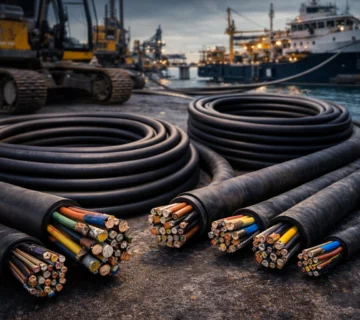
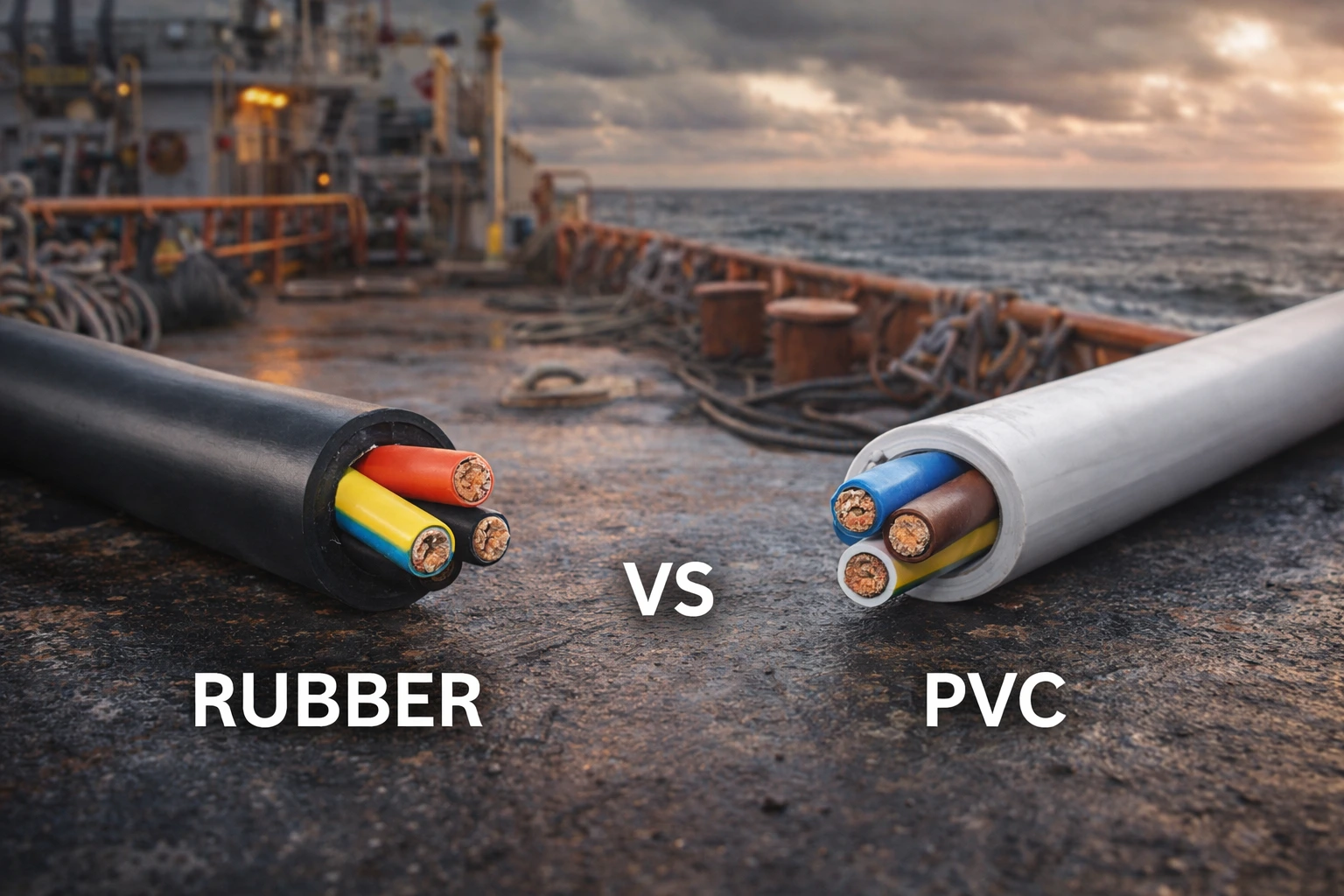
Choosing the right cable type is critical for marine applications where harsh conditions can impact performance and safety. In marine environments, cables must withstand moisture, salt exposure, vibration, and temperature variations. For this reason, many industries compare rubber cable vs PVC cable to determine the best option.
What Is Rubber Cable?
Rubber cable is designed with flexible insulation materials that provide durability and resistance in harsh conditions. In demanding environments, rubber cables perform reliably due to their flexibility and strong protective properties.
Key features of rubber cable include:
- High flexibility
- Resistance to moisture and chemicals
- Durability under mechanical stress
- Performance in extreme temperatures
What Is PVC Cable?
PVC cable uses polyvinyl chloride insulation and is commonly used in standard electrical installations. As a result, PVC cables are widely available and cost-effective.
Key features of PVC cable include:
- Lower cost
- Good electrical insulation
- Suitable for fixed installations
- Moderate durability
Key Differences Between Rubber Cable and PVC Cable
When comparing rubber cable vs PVC cable, several differences are important.
🔹 Flexibility
Rubber cable offers superior flexibility, making it suitable for applications involving movement or vibration.
🔹 Durability
Rubber cable performs better in harsh environments, while PVC cable may degrade under extreme conditions.
🔹 Moisture Resistance
Rubber cable provides better resistance to water and salt exposure compared to PVC cable.
🔹 Temperature Performance
Rubber cable performs well in extreme temperatures, whereas PVC cable may become brittle or less effective.
Why Rubber Cable Is Better for Marine Use
Marine environments require cables that can handle constant exposure to water and vibration. For this reason, rubber cable is often the preferred choice.
Rubber cable offers:
- Better resistance to saltwater corrosion
- Higher flexibility for moving equipment
- Improved durability in offshore conditions
Because marine conditions are harsh, rubber cable ensures long-term reliability.
When PVC Cable May Be Suitable
PVC cable may still be suitable for certain applications. In comparison, it works well in:
- Indoor electrical systems
- Fixed installations
- Low-stress environments
However, it is not ideal for demanding marine conditions.
Final Thoughts
Rubber cable and PVC cable serve different purposes depending on application requirements. As a result, industries choose rubber cable for marine environments due to its flexibility, durability, and resistance to harsh conditions, while PVC cable remains suitable for general electrical installations.
For high-performance marine applications, businesses rely on a trusted rubber cable supplier in UAE to ensure durability and compliance.
FAQs – Frequently Asked Questions
Q1. Which cable is better for marine use: rubber or PVC?
Ans – Rubber cable is better for marine use due to its flexibility, moisture resistance, and durability in harsh conditions.
Q2. Why is rubber cable preferred in marine environments?
Ans – Rubber cable is preferred because it resists saltwater, vibration, and extreme temperatures.
Q3. Can PVC cable be used in marine applications?
Ans – PVC cable can be used in low-risk or indoor marine applications but is not ideal for harsh conditions.
Q4. What is the main difference between rubber and PVC cable?
Ans – Rubber cable offers higher flexibility and durability, while PVC cable is more cost-effective and suited for fixed installations.