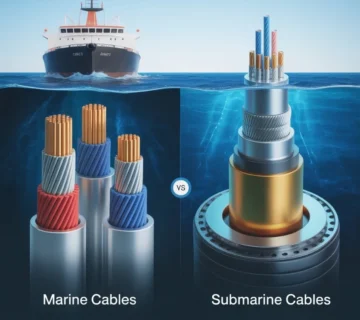

Marine electrical cables are the backbone of power, control and communication systems on ships, offshore platforms and industrial marine environments. Choosing the right cable is critical for safety, performance and compliance — especially in regions like the UAE, where heat, humidity and marine corrosion are constant challenges.
This complete guide explains marine electrical cable specifications, cable types, standards, installation requirements and common applications. If you’re looking for technical clarity and quick, voice-friendly answers — this guide covers everything.
What Are Marine Electrical Cables?
Marine electrical cables are specialized cables designed to withstand moisture, vibration, salt corrosion, fire, oil, mechanical stress and fluctuating temperatures on vessels and offshore infrastructure.
These cables follow strict standards such as:
- IEC 60092 series (international marine cable standard)
- Lloyd’s Register, DNV, ABS, BV
- IEC 60332 (fire performance)
- IEC 60754 (halogen acid gas emissions)
- IEC 61034 (smoke density)
Types of Marine Electrical Cables (With Specifications)
1. Power Cables (Low Voltage / Medium Voltage)
Used for main and auxiliary power distribution.
Key Specifications:
- Voltage ratings: 6/1kV, 3.3kV, 6kV
- Materials: XLPE, EPR, PVC
- Conductors: Tinned copper
- Features: Flame-retardant, low-smoke, vibration-resistant
2. Marine Shipboard Cables
Used throughout vessel electrical systems (control rooms, engine rooms, deck equipment).
Specifications:
- Designed for harsh marine conditions
- High mechanical strength
- Screened/armoured options
- Halogen-free options for fire safety
3. Instrumentation & Control Cables
Used for sensors, automation systems and control circuits.
Specifications:
- Multi-core and multi-pair
- Shielded to minimize electromagnetic interference (EMI)
- Manufactured to IEC 60092-376
4. Marine Grade Flexible Cables (H07RN-F, NEK, MPRXCX)
These are heavy-duty flexible rubber cables used in portable machinery, deck equipment and temporary power setups.
Specifications:
- Rubber-sheathed
- Oil and abrasion-resistant
- Extreme flexibility
- Temperature rating: −25°C to +60°C
5. Marine Fiber Optic Cables
Used for high-speed data transmission, navigation systems and communication networks.
Specifications:
- Steel-wire armouring
- Water-blocked construction
- UV resistance
- Suitable for long-distance data transfer
6. Battery Cables (Marine Grade)
Used for battery banks, switchboards and engine starting systems.
Specifications:
- Tinned copper for corrosion resistance
- High conductivity
- Resistant to oils, salt and vibration
Key Technical Specifications You Must Check (2025 Guide)
-> Conductor Type
- Tinned copper (marine standard)
- Solid / stranded / class 5 flexible
-> Sheathing Material
- PVC
- EPR (rubber)
- LSZH (low smoke zero halogen)
- CSP
-> Armour
- Steel wire braid (SWB)
- Aluminium wire armour
- Copper tape screen (for EMI protection)
-> Fire Performance
Check whether the cable is:
- Flame-retardant
- Fire-resistant
- Low smoke
- Halogen-free
-> Environmental Resistance
Marine cables must resist:
- UV exposure
- Saltwater
- Chemicals
- Oil
- Mechanical stress
- Continuous vibration
-> Temperature Ratings
Typical marine cables operate within:
- −40°C to +90°C (depending on insulation)
Applications of Marine Electrical Cables
Marine electrical cables are used across:
- Offshore platforms
- Ship engine rooms
- Power distribution systems
- Navigation equipment
- Lighting systems
- Control panels
- Communication systems
- Battery and charging systems
- Deck machinery
In the UAE, these cables are widely used in shipyards, ports, offshore energy projects and marine logistics.
How to Choose the Right Marine Cable
1. Identify required voltage rating
2. Check conductor size based on load
3. Confirm fire and halogen-free requirements
4. Choose armoured or unarmoured
5. Verify environmental resistance needs
6. Ensure compliance with IEC 60092
7. Choose tinned copper for maximum durability
8. Confirm supplier certifications (DNV, ABS, LR)
This quick checklist makes the selection process easy for engineers and procurement teams. Visit Marine Cables Supplier in UAE for high-quality marine-grade cables.
FAQs – Frequently Asked Questions
Q1. What are marine electrical cable specifications?
Ans – Marine electrical cable specifications define voltage rating, conductor material, insulation type, fire performance, armouring, environmental resistance and compliance with IEC 60092 marine standards.
Q2. What is the difference between marine cable and normal cable?
Ans – Marine cables are corrosion-resistant, flame-retardant, moisture-proof and vibration-resistant — while normal cables are not designed for harsh marine conditions.
Q3. Which standard is used for marine cables?
Ans – The main standard is IEC 60092, followed by approvals from DNV, ABS, Lloyd’s Register and Bureau Veritas.
Q4. What is the best material for marine cables?
Ans – Tinned copper conductors with LSZH or EPR insulation provide the highest durability in marine environments.
Q5. Where are marine electrical cables used?
Ans – They are used in ships, offshore platforms, control panels, lighting systems, battery systems, navigation equipment and power distribution.
Q6. What is the voltage rating of marine cables?
Ans – Common ratings include 0.6/1kV, 3.3kV, 6kV, depending on the application.
Q7. How do I choose the right marine grade cable?
Ans – Check load capacity, insulation type, armouring, fire safety, environmental exposure and IEC 60092 compliance.